What Is a Dog? Origins, Biology and What Dogs Really Need
What is a dog? Learn where dogs came from, how their bodies and senses work, what they need to thrive, and which warning signs mean a trip to the vet.
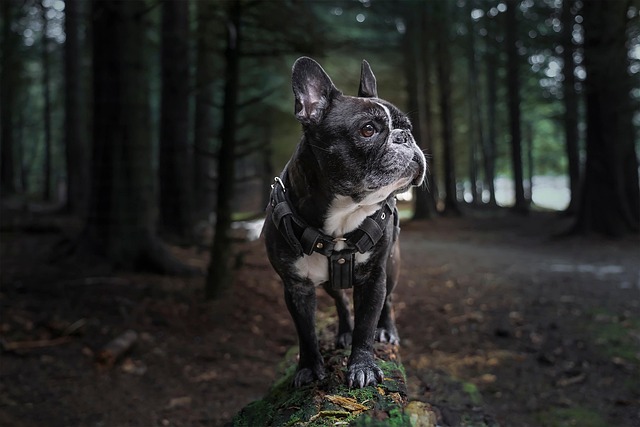
A dog (Canis lupus familiaris) is a domesticated mammal that descended from wolves and has been selectively shaped by people over many thousands of years. Dogs are one species, whether you’re looking at a 4-pound Chihuahua or a 150-pound Great Dane. What makes a dog a dog is not just biology, though. It’s the unusual partnership they’ve formed with humans, which has changed how they think, communicate and live.
This article covers where dogs came from, how their bodies and senses work, how they differ from wolves and from us, and what that means for everyday care.
Where dogs came from
Dogs were the first animal humans domesticated, well before farm animals. The exact timing is still debated. Genetic and archaeological evidence points to somewhere between roughly 15,000 and 40,000 years ago, and researchers disagree about where it happened and whether it happened once or more than once. That’s a wide range, and anyone who gives you a single confident date is simplifying.
One thing is clearer: today’s dogs did not come from modern gray wolves. Dogs and modern wolves share a common ancestor, an ancient wolf population that no longer exists. A popular theory is that some of these wolves began hanging around human camps to scavenge scraps. The ones that were calmer around people did better, and over generations they became less fearful and more cooperative. People then began deliberately breeding for useful traits, such as herding, guarding, hunting and retrieving.
That long history explains a lot about your dog today. Many behaviors that seem odd, like circling before lying down or burying a bone in the couch, are leftovers from ancestors that lived very differently.
How a dog’s body works
Dogs are mammals, so they’re warm-blooded, give birth to live young and nurse their puppies. A few basics are useful for any owner to know.
- Teeth: Puppies have 28 baby teeth. Adult dogs have 42 permanent teeth. They’re built for gripping, tearing and crushing, not for grinding like ours.
- Temperature: A healthy dog’s normal body temperature is higher than ours, usually around 100.5 to 102.5°F. Your dog can feel warm to your touch and still be perfectly fine.
- Cooling down: Dogs sweat only a little through their paw pads. They cool mainly by panting, which is why hot weather and hot cars are dangerous for them.
- Diet: Dogs are classed as carnivores but have adapted to digest more starch than wolves can. In practice they’re flexible omnivores, which is why complete commercial dog foods can work well. That doesn’t mean they can eat whatever we do.
Dogs also come in an enormous range of shapes. Flat-faced breeds like Bulldogs and Pugs often struggle with breathing and overheating. Deep-chested breeds like Great Danes and Standard Poodles carry a higher risk of bloat. Long-backed breeds like Dachshunds are prone to spinal problems. That doesn’t mean every dog of those breeds will have trouble, but it’s worth knowing the tendencies before you choose one.
How dogs experience the world
If you want to understand a dog, start with the senses. Dogs live in a different sensory world from ours.
Smell comes first
Smell is your dog’s main way of gathering information. A dog’s nose has many times more scent receptors than ours, and a large part of the brain is devoted to interpreting what it picks up. When your dog stops to sniff the same patch of grass for a full minute, it’s reading a kind of local newspaper: who passed by, when, and whether they were healthy, stressed or friendly. Letting your dog sniff on walks isn’t wasting time. It’s mental exercise, and for many dogs it’s more tiring than a quick trot.
Hearing and vision
Dogs hear higher-pitched sounds than we do and can pick up quieter noises from farther away. That’s why fireworks, vacuum cleaners and smoke alarms can be so upsetting. Their color vision is more limited than ours. They see blues and yellows reasonably well but have trouble telling red from green. They’re good at spotting movement, though, which helps explain why a squirrel across the park gets noticed instantly while a toy lying still in the grass can go ignored.
Dogs are not small wolves, and not small people
Outdated ideas about dogs still float around, such as the notion that you must be the alpha and dominate your dog. Modern behavior research, and the major veterinary behavior organizations, don’t support this. Dogs live with us as family members, not as members of a wolf pack, and they respond best to clear, consistent, reward-based training.
Dogs communicate mostly through body language. Some things to watch for:
- A wagging tail doesn’t always mean a happy dog. A stiff, high, fast wag can signal arousal or tension. A loose, sweeping wag with a relaxed body is more likely friendly.
- Yawning, lip-licking and turning away can mean your dog feels uneasy, even when nothing dramatic is going on.
- Showing the whites of the eyes, a frozen body or a tucked tail are signs of fear. Give the dog space.
- A growl is information, not defiance. Punishing a growl can teach a dog to skip the warning and go straight to a bite.
Dogs have also become remarkably tuned in to us. They follow our pointing gestures, read our faces and respond to our tone of voice in ways that even our closest primate relatives generally don’t. That attentiveness is a big part of what separates a dog from a wolf raised by hand.
One species, hundreds of breeds
All domestic dogs belong to the same species, but selective breeding has produced an extraordinary range of types. The American Kennel Club recognizes more than 200 breeds, and international kennel organizations recognize several hundred more. Breeds were originally developed for jobs: Border Collies for herding, Retrievers for fetching game, Terriers for catching vermin, Greyhounds for chasing.
Breed can give you a rough guide to energy level, trainability and typical health risks, but it’s only a guide. Individual personality varies a lot, and early socialization, training and daily life matter just as much. Mixed-breed dogs are equally valid companions, and many have a lovely mix of traits, although their ancestry can be harder to predict.
Size affects lifespan in a way that surprises many owners. Smaller dogs generally live longer than giant breeds, which often reach only 7 to 10 years, while many small dogs live well into their teens. Good care can improve the odds for any dog, but it can’t completely override genetics.
What a dog needs from you
Because dogs are social animals shaped to live with people, their needs go beyond food and a bed.
- Nutrition: A complete and balanced diet suited to your dog’s age, size and health. Ask your vet if you’re unsure what’s right, especially for puppies, seniors or dogs with medical conditions.
- Exercise: This ranges widely by breed and age. A young Border Collie may need a couple of hours of activity a day, while a senior Pug might be happy with short, gentle walks.
- Mental stimulation: Sniffing, puzzle feeders, training games and play prevent boredom, which often shows up as chewing, digging or barking.
- Company: Dogs aren’t built to spend long hours alone every day. Gradual training in being left alone helps, and some dogs will still need a break from a dog walker or daycare.
- Preventive healthcare: Regular checkups, vaccinations as advised by your vet (rabies vaccination is legally required in most US states), parasite control, dental care and spaying or neutering decisions made with your vet’s guidance.
- Safety: A secure yard or leash, a collar with ID and a microchip with up-to-date contact details.
A few foods are well-known dangers, including chocolate, grapes and raisins, onions, macadamia nuts and anything containing xylitol, a sweetener found in some gum, candy and peanut butters. If your dog eats any of these, call your vet or an animal poison helpline straight away rather than waiting to see if signs develop.
Common mistakes and warning signs
The most common mistakes are usually well-meant ones. Owners often treat dogs like small humans, with hugs that many dogs tolerate rather than enjoy, too many treats, or a walk that’s all pulling and no sniffing. Others expect too much too soon from a puppy or a newly adopted rescue, who may need weeks to settle in. Skipping socialization and training in the first months can cause problems later that are harder to fix.
General information can’t replace a physical examination, and dogs are good at hiding illness. Contact your vet promptly if your dog shows any of the following:
- Not eating, or noticeably less energetic, for more than a day
- Repeated vomiting or diarrhea, especially with blood or in a puppy or senior dog
- Limping that doesn’t improve, or reluctance to jump or climb stairs
- Increased thirst or urination
- Changes in weight, or a new lump
- Bad breath, drooling or difficulty eating
- Sudden changes in behavior, such as aggression, hiding or confusion
Some situations are emergencies and call for immediate veterinary care, by phone first if you can, so the clinic can be ready for you:
- Collapse, seizures or trouble breathing
- A swollen, hard belly with unproductive retching, which can signal bloat
- Suspected poisoning
- Heavy bleeding or major trauma
- Heatstroke signs such as heavy panting, drooling, weakness or vomiting after heat or exertion
Don’t try to treat these at home or wait until morning.
Common questions
Is a dog a wolf?
Not exactly. Dogs and wolves share a common ancestor and are closely related, but modern dogs descended from an extinct wolf population, not from today’s wolves. Dogs differ from wolves in behavior, digestion and their ability to bond with people.
How long do dogs live?
It depends mainly on size and breed. Many small dogs reach 12 to 16 years, while giant breeds may live only 7 to 10. Diet, weight, dental care and regular vet checks all make a difference.
Are dogs color blind?
No, but their color vision is more limited than ours. They see mainly shades of blue and yellow and have trouble telling red from green.
Can all dogs breed with each other?
Biologically they’re one species, so yes in principle. In practice, extreme size differences make some pairings unsafe, and responsible breeding involves health testing and careful planning.
How smart are dogs?
Dogs are good at learning from people and reading our signals, and many can learn dozens of words or commands. Intelligence varies between individuals and breeds, and what looks like stubbornness is often a mismatch between a training method and a dog’s motivation.